Can Dentists Advertise on ChatGPT? Here’s What I’d Check Before Spending a Dollar
What dental clinics should check before investing in ChatGPT Ads, from case-by-case US approval to measuring confirmed appointments without sharing patient information.
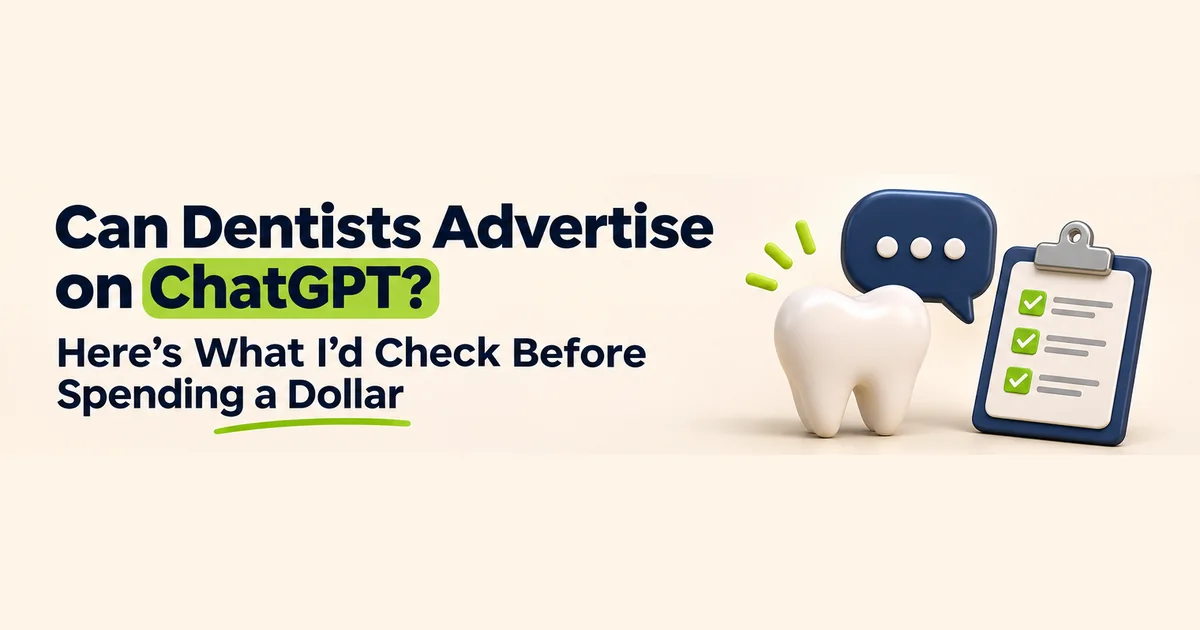
Imagine investing in creative, a landing page and an ad budget, then learning your dental practice cannot run the campaign. Before recommending ChatGPT Ads for dentists, I’d check whether the clinic and the service it wants to promote can be approved.
Can dentists advertise on ChatGPT? OpenAI’s published policy says it may allow dental services ads from approved advertisers in the United States on a case-by-case basis. Health services ads outside the US are generally prohibited. Confirm the current approval route for your clinic and proposed service before spending on creative.
What are ChatGPT Ads?
ChatGPT Ads are sponsored placements in eligible ChatGPT experiences. People can use the assistant to research dental services or compare clinics, but OpenAI says ads do not appear near sensitive content such as personal health conversations. Even an approved dental advertiser should avoid assuming its ads will appear alongside those questions. See OpenAI’s explanation of ads in ChatGPT and my guide to paid placements and organic AI recommendations.
1. Check dental advertising eligibility first
Read OpenAI’s advertising policies and check the current onboarding guidance. Some regulated categories are open only to selected advertisers, and applications may be unavailable. OpenAI may require proof of licensure.
Check the target market, specific service, current application route, proposed claims, destination page and measurement plan. Account access alone does not establish approval for dental advertising.
2. An illustrative dental clinic case
BrightSmile Dental Clinic is a fictional practice that offers general dentistry, preventive exams, cleaning and cosmetic dentistry consultations. It wants more appointment enquiries. Before proposing a budget, I’d ask where it operates and which service it wants to advertise. A US practice can ask whether its service can be reviewed. A practice targeting another market should check the applicable restriction before making any plans.
3. Decide what to do after the eligibility check
| Result | Next step |
|---|---|
| Approved for the proposed service | Plan a campaign within the approved scope. |
| Application under review | Wait for a decision before committing launch spend. |
| Category or application route unavailable | Focus on other channels. |
| Eligibility uncertain | Ask OpenAI to clarify before spending. |
4. Build the campaign around patient trust
If approval is granted, use factual language and avoid promises about treatment outcomes. “Learn about our preventive dental care services and how to request an appointment” is more precise than “Get guaranteed perfect teeth.” Make the landing page easy to use. Include accurate service details, contact information, relevant credentials and a clear appointment request process.
5. Measure confirmed appointments and protect patient privacy
Suppose BrightSmile runs a small approved campaign. These hypothetical figures illustrate the difference between website traffic and appointments:
| Metric | Illustrative result |
|---|---|
| Advertising spend | US$1,200 |
| Website visits | 480 |
| Appointment enquiries | 48 |
| Qualified enquiries | 30 |
| Confirmed appointments | 18 |
| Cost per qualified enquiry | US$40 |
| Cost per confirmed appointment | US$66.67 |
Define a qualified enquiry before the test, for example, genuine interest in a service the practice offers and an appointment the team can accommodate. Count confirmed bookings separately and review attendance alongside bookings when judging performance.
Use aggregate clinic reporting where appropriate. Keep patient information, booking details and clinical data out of advertising platforms. Have the appropriate privacy or compliance personnel review the proposed data flow before installing tracking on healthcare pages or forms. See HHS guidance on tracking technologies and OpenAI’s conversion measurement documentation. For general campaign budgeting, see my guide to setting up a first ChatGPT Ads test.
6. What if ChatGPT advertising is unavailable?
- Search engine optimisation: Publish useful answers to common questions about routine visits, first appointments and preventive care. Have the practice review the content for clinical accuracy.
- Local search: Keep the clinic’s location, contact details, hours and services current across its public listings.
- Website conversion: Make service pages, forms and appointment requests easy to find and use.
- Administrative automation: Evaluate scheduling, enquiry routing and follow-up tools against patient confidentiality, security and applicable healthcare requirements.
7. How I would approach a dental marketing strategy
I’d start with eligibility and approval, then plan the offer, landing page and measurement around what the clinic can actually run. After launch, I’d review qualified enquiries, confirmed appointments, attendance and acquisition cost before increasing spend.
8. Three practical scenarios
- US clinic promoting preventive services: Confirm that applications are available and secure any required approval for the proposed service.
- Clinic outside the US: If health services ads are unavailable in its market, focus on organic search, local listings and making appointments easier to request.
- Approved clinic with few bookings: Review the offer, landing page and aggregate enquiry-to-booking rate before adding budget.
These are illustrative scenarios. They do not describe completed client work.
Frequently asked questions
Can dentists advertise on ChatGPT?
OpenAI may approve US dental services ads case by case. Clinics should verify current application availability and obtain the required approval. Health services ads outside the US are generally prohibited.
Are ChatGPT Ads available to every dental clinic?
No. Market, policy category, advertiser approval and the specific service determine eligibility.
What should a dental clinic measure?
Measure qualified enquiries, confirmed appointments, attendance, and the cost per qualified enquiry and confirmed booking using appropriately aggregated reporting.
Can a clinic use AI for marketing without ChatGPT Ads?
AI tools can support content planning and suitable administrative work, subject to confidentiality, security, professional and regulatory requirements.
Should dentists stop investing in SEO?
Organic and local search can help prospective patients find the clinic and evaluate its services regardless of paid-ad eligibility.
Check eligibility before spending
Confirm whether your practice and proposed service can be approved. Then build a campaign around accurate information, a clear appointment process and a measurement plan that protects patients.
Need help planning your digital marketing strategy? Tell me about your project, email hi@zainababdullah.tech or message me on WhatsApp at +92 331 6944411.
BrightSmile is fictional. The example does not represent an approved or completed dental advertising campaign. Verify current platform policies and applicable healthcare requirements before launch.